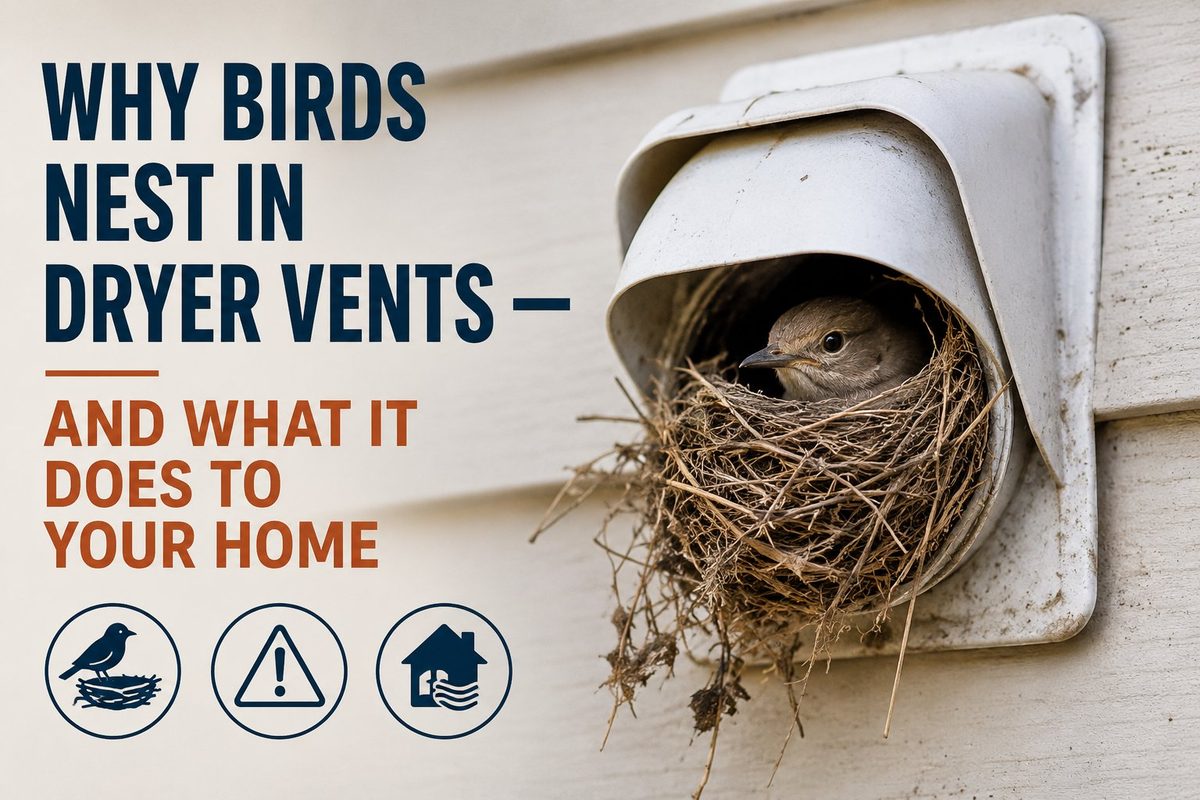
Every spring we get the same call: the dryer is taking three cycles to dry one load, there's a strange chirping near the laundry room wall, and bits of straw are poking out of the exhaust hood outside. The culprit is almost always a bird that decided your dryer vent was the perfect place to raise a family. Clearing it — and the packed lint behind it — is a standard part of our dryer vent cleaning service.
It's an easy mistake for a bird to make. To understand how to prevent it, it helps to understand why it keeps happening in the first place.
A dryer or bathroom exhaust vent checks nearly every box on a nesting bird's wish list:
House sparrows and starlings are the usual offenders in our area, but they're not the only ones. Once a bird finds a spot it likes, it will pack it with grass, twigs, feathers and other material — often a surprising amount of it.
A nest in a vent isn't just a nuisance. It kicks off a series of problems, each one leading to the next.
The whole point of a dryer vent is to carry hot, moist air out of your home. Stuff that channel with nesting material and the air has nowhere to go. This is the root cause that everything else flows from.
When exhaust can't escape, heat and moisture back up into the dryer. Clothes take two or three cycles to dry, the appliance runs hotter than it should, and your energy bill climbs. Over time, that heat stress shortens the life of the dryer itself.
All that humid air the dryer can't expel doesn't simply vanish — it condenses inside the duct and the wall cavity. Trapped moisture is how you end up with musty smells, and in the worst cases, mould growth in places you can't see.
A nest brings more than birds. Droppings, feathers and abandoned nesting material attract mites and insects, and create an unpleasant odour that can get pulled back into the house every time the vent is used.
This is the one that matters most. Dryers produce lint, and lint is highly flammable. Add a tightly packed bird's nest of dry grass and twigs sitting right in the exhaust path, and you've combined a heat source, a blockage, and a pile of kindling. Vent blockages are a leading cause of dryer fires — and a nest is one of the most effective blockages there is.
The short version: one nest blocks airflow → the dryer overheats and works harder → moisture and pests build up → and the combination of trapped lint, heat and dry nesting material becomes a real fire hazard. It all traces back to that one open vent.
Your first instinct when you find a nest is to pull it out. But once there are eggs or chicks inside, many birds are protected under Canadian law, and removing an active nest isn't always something you're allowed to do until the babies have left. That can mean living with the problem for weeks during nesting season.
We cover the legal side in more detail in a companion article — but the practical takeaway is simple: prevention before nesting season is far easier than dealing with a nest after the fact.
Layer Latch is a dual-layer guard designed to keep birds and pests out of your dryer and exhaust vents while still letting the vent flap open and air flow freely the way it's supposed to. Because it blocks entry without restricting exhaust, it heads off the whole cause-and-effect chain above — before a bird ever moves in. It's one of several ways to protect a vent, and a straightforward one for most Edmonton-area homes.
If your dryer is running long or you've spotted activity around an exterior vent, we can take a look. Honest answers, flat-rate pricing, no pressure.