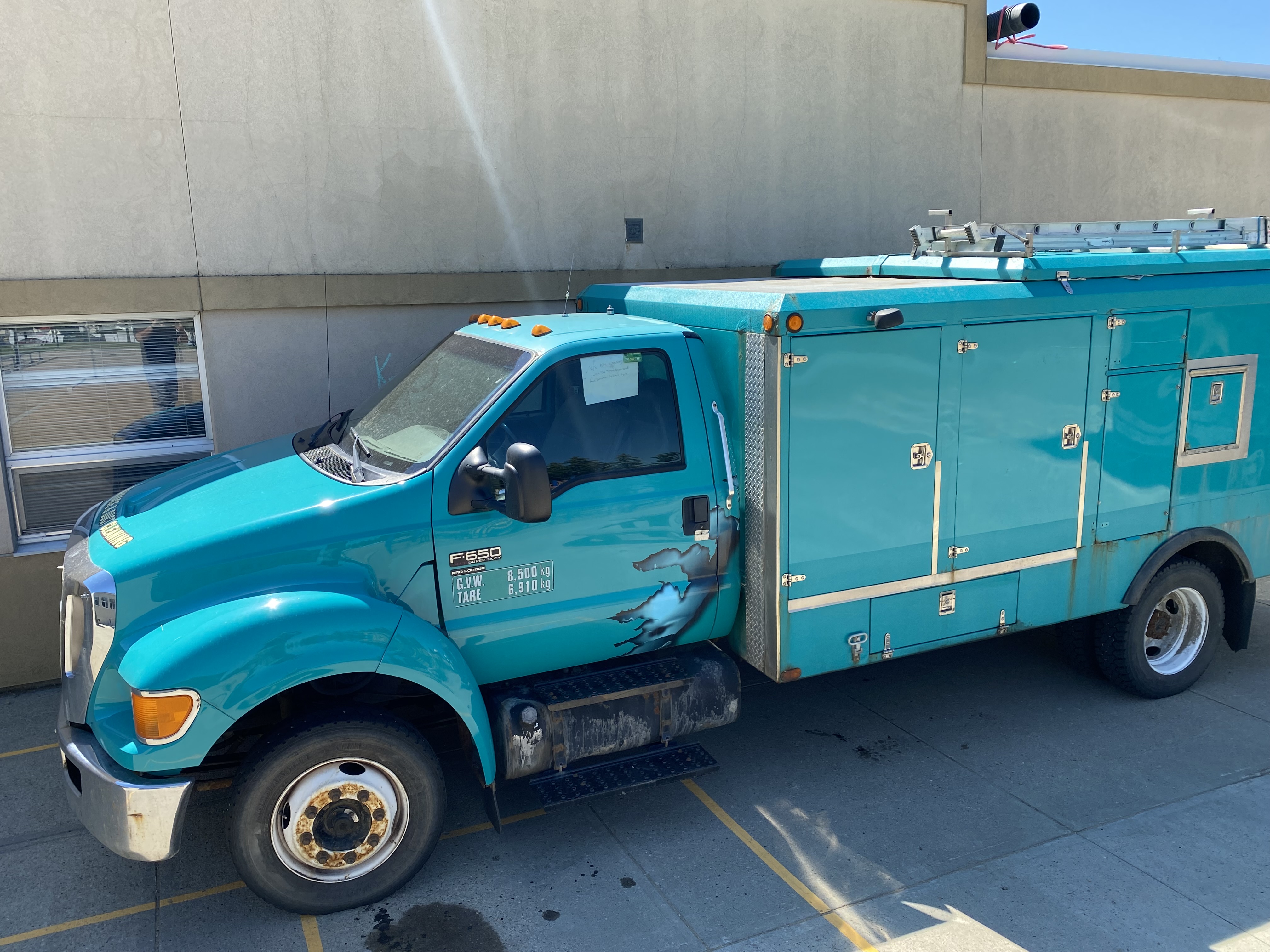
Attic insulation removal across Strathcona County: vacuumed out under sealed containment, bare joists photographed. Free inspection first — and often a top-up is the honest recommendation.
The whole job is containment: the material goes from the attic into sealed bags without passing loose through the house. See the full process, and what makes an attic worth emptying, on the main insulation removal page.
An attic is ventilated on purpose, which means it breathes outside air continuously and forever. The insulation is effectively a filter with no service interval, and in the older half of this county it has been filtering since the sixties.
These attics have the longest accumulation in the county and the most ways in. What we find is the usual older-home combination — material that has been wet at some point, occupants past or present, and decades of settled fines. Not all of it warrants removal. What does is anything matted, contaminated or unable to support new material on top.
Alberta’s heavy wildfire smoke years put very fine particulate into every ventilated attic in the province, and there is no way to clean insulation in place. In most homes this is not a reason to remove anything. In a house where somebody has genuine respiratory sensitivity, and where the material is already old, it becomes part of the argument — and we will be straight with you about how much of the argument it is.
Contained house fires leave attics that smell every summer when the space warms up, long after everything below has been restored. Insulation holds smoke permanently. This is one of the few cases where visually sound material still has to go.
Very rarely a candidate. If a newer county home needs insulation replaced it is because moisture got into it, and the moisture path is the more important half of that conversation.
We are not going to tell you that a bad wildfire year means your attic must be emptied — for most homes it doesn’t. It becomes a real factor when it lands on insulation that is already old, damp or contaminated, and we’ll show you which of those apply.
Removal is ninety percent containment and ten percent suction. The difference between a clean job and a disaster is entirely in the setup.
A high-volume insulation vacuum runs from the trailer up through the attic hatch. The old material travels down the hose straight into sealed bags outside — it is never carried loose through your hallway in garbage sacks.
Poly at the hatch, protection on the floors and stairs along the hose run, and negative pressure on the working side. Attic dust is decades of fines, and the entire point is that none of it ends up in your living space.
Rodent droppings, nesting, water-damaged and mould-affected insulation are bagged and disposed of as the contaminated waste they are, not tipped into the back of a truck. The attic floor, top plates and wiring are cleaned down afterwards.
Before-and-after photographs of bare joists are part of the job. It’s the only proof that exists for work that happens in a space you’ll never look into — and it’s what a buyer’s inspector will want in five years.
We go up, look properly, and photograph what’s actually there. A surprising number of attics we’re called to don’t need emptying at all, and we’ll say so.
Square footage, what’s coming out, disposal, and whether new insulation is going back in — as a single all-in figure agreed before anyone climbs a ladder.
Containment at the hatch, floor protection along the hose run, and the vacuum staged outside. Nothing starts until the path between your attic and the truck is closed.
The attic is emptied to bare joists, the deck and top plates are cleaned, and you get the photographs. If new insulation is part of the job, it goes in the same day.
Loose grey-brown pebbled insulation in a pre-1990 attic may be vermiculite, which can contain asbestos. Removing it is regulated abatement in Alberta and requires a licensed contractor — we are not one, and disturbing it would be the worst thing we could do for you. We photograph it, explain it, leave it exactly as we found it, and there’s no charge for the visit.
Removal is quoted, not flat-rated — and here is exactly what drives the number, so you can sanity-check anyone else’s quote against ours.
We photograph what’s up there and tell you plainly whether it needs to come out. Roughly as often as not the answer is no, and a top-up over the top is the cheaper, better job.
Extraction, containment, disposal and cleanup in a single figure. Disposal in particular is where surprise line items appear on other quotes — ours is in the number.
You can buy the removal on its own — ahead of a re-roof, a renovation, or just to get contaminated material out. If new insulation is going back, doing both in one visit costs less than two separate mobilisations.
Hourly pricing on a removal punishes you for a difficult attic that isn’t your fault. We look at it first precisely so we can carry that risk instead of passing it to you mid-job.
Worth saying plainly, because we’re the ones being paid: dry, undisturbed old insulation doesn’t need removing. It hasn’t stopped working — there just isn’t enough of it, and blowing over the top is cheaper and just as effective. Removal earns its cost when the material is contaminated, wet, mould-affected or matted flat. If we come to your Sherwood Park attic and it’s the first case, we’ll tell you so and quote you the cheaper job.
Free attic inspection anywhere in Sherwood Park — photographs, a straight diagnosis, and a written number.
Bundling saves a second trip and a second booking — add-on rates only apply while the truck is already in your driveway.
Across Strathcona County, from the original hamlet to the newest phase.
Aspen Trails · Brentwood · Broadmoor · Cambrian · Centre in the Park · Clarkdale Meadows · Clover Bar Ranch · Craigavon · Davidson Creek · Emerald Hills · Foxboro · Glen Allan · Heritage Hills · Lakeland Ridge · Maplegrove · Mills Haven · Nottingham · Regency Park · Salisbury Village · Sherwood Heights · Summerwood · Westboro · Woodbridge Farms · Wye Crossing
Everything we do here lives on the Sherwood Park service page, and the full region is on service areas.
Tell us a little about your home and we’ll get right back to you with honest, flat-rate pricing — no obligation.
No obligation. We’ll reply with flat-rate pricing.
Or call us directly at 780-932-7337